Boosting Success in Engineering Changes
· 6 min read

SeriesEngineering Strategy 10123 posts
Ever found yourself in engineering departments where tools and practices are adopted and discarded rapidly?
Ever found yourself in engineering departments where tools and practices are adopted and discarded rapidly?
Have you noticed a broad spectrum of aspirations among your team members?
We all continuously hear about high-performance teams and the importance of becoming one. But there is actual no real definition of it. Is it?
Leading a team or a company necessitates having individuals who can assist in realizing your objectives. Undoubtedly, this involves establishing a hiring process. Have you considered how hiring for software projects may consume extensive time and effort?
Have you ever felt stuck or that you're not making progress towards your goal with the current approach you or your team are employing?
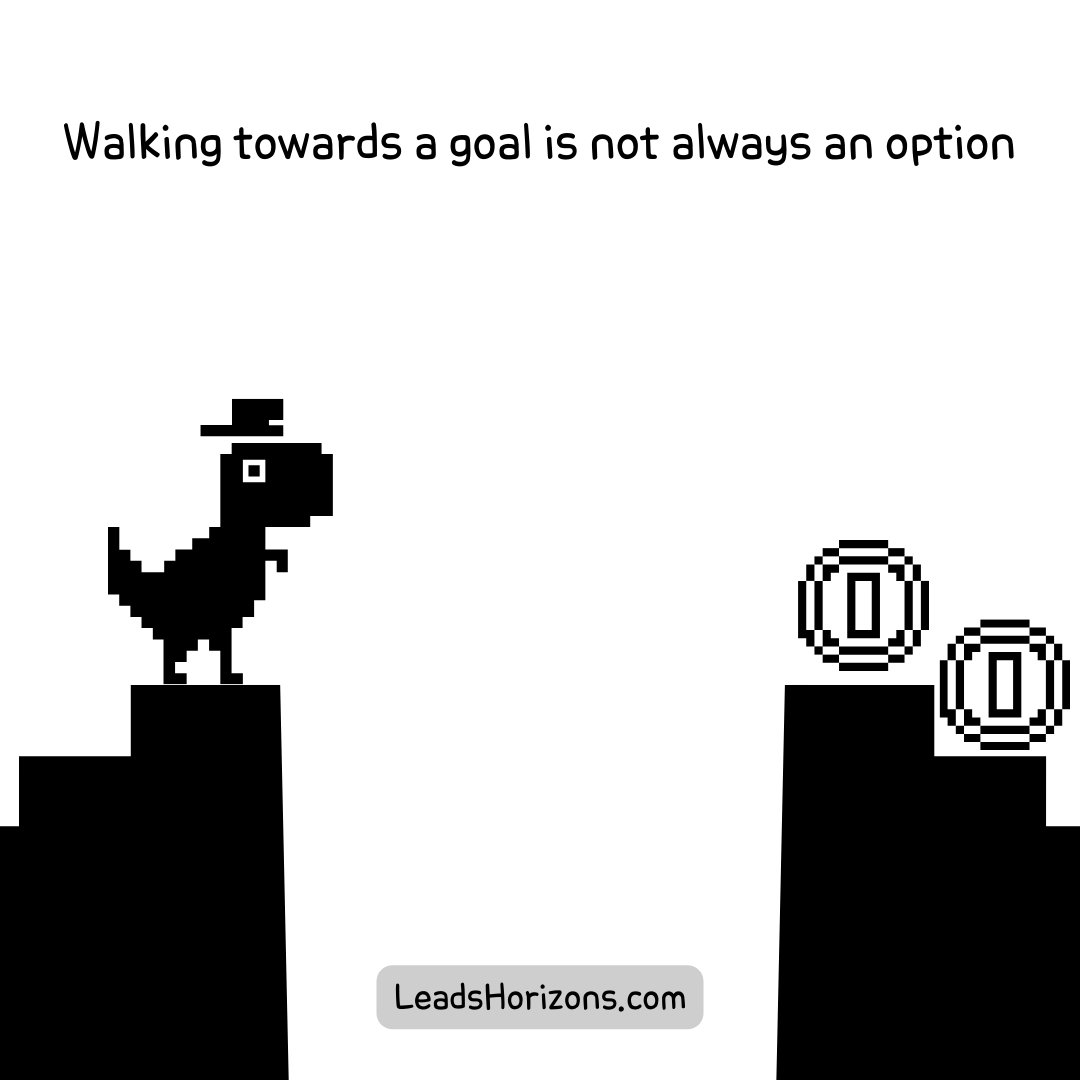
From a young age, we're taught the value of steady, incremental progress. The idea is that like a determined tortoise, we can reach our goals by moving deliberately in the right direction. But could there be a more efficient approach?
Before starting this article, I would like to extend my thanks for reading, and also my apologies to for not being able to write last week. It was a busy but enriching week at some training where I actually learned quite a few things, I will share them here soon so stay tuned.
I will today release this short article, and expect a longer one towards the end of this week.
Have you ever encountered professionals who seem to place importance only on a certain type of knowledge? It's a situation humorously depicted in this comic strip from CommitStrip.
The Mistakes of Youth comic by CommitStrip
While expertise is certainly beneficial, it's not always a necessity in the market. In the end, we need to ask ourselves the question if we are either “problem solvers” or “executing monkeys”.
The role of engineering professionals is evolving, moving from a sole focus on knowledge to an all-encompassing approach, represented by the “T-shaped” model. The objective is not just to build right, but to build what's necessary. This calls for a blend of product, technical, and interpersonal skills. For leaders, this translates into promoting continuous learning, cross-functional teamwork, and advocating for stepping beyond comfort zones, thereby cultivating a culture that appreciates all facets of everyday work.
What is your stand on the location where you work from? Work location seems to have become a complex subject for companies and employees in the last year. With an imbalance in the demand for local and remote work, the issue merits discussion.
![Employers Offer Fewer Fully Remote Jobs and More Fully Onsite Jobs Than Employees Want — WFH Research [1]](/assets/images/body-1-fa7bb138413d50cdebcb9d7b2635b1f0.png)
Reflecting on my professional journey, I have had the opportunity to explore various work modalities. From my early days in on-site environments, savoring technical discussions around me, to remote work across different regions, embracing the nomadic lifestyle and thriving in multicultural settings.
Let's delve into this topic further in the article.
I currently feel like the odd one, out. It appears that many people are associating peer review in software with code reviews via pull requests. Do you also share this perspective?
Even before I transitioned into leadership roles, where coding took on a secondary function, I did not engage in pull requests. In fact, I haven't submitted a pull request in a professional context since 2017.
Let's delve into the nuances of the peer review process in this article.
Workplaces operate as complex social ecosystems, with dynamics that reach beyond our immediate coworkers and supervisors to include a broader network of relationships. These secondary connections, which are frequently underestimated, are vital to personal success and the overall effectiveness of an organization.
Have you ever thought about how to manage these second level relationships? This post aims to delve into the concept of second level relations at work and their significance.
This past year, the buzz word in technology has undeniably been "AI". But what exactly do we mean when we say AI?
Often, our comprehension of terms and definitions can be clouded due to the ambiguity in the language used. A prime example is the term "Artificial Intelligence" (AI). This term used to encompass a broad spectrum of technologies, but recently, it has become largely associated with Large Language Models (LLMs).